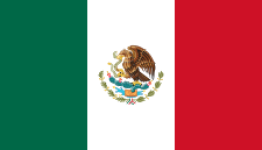
In a significant decision with immediate repercussions for the upcoming 2026 World Cup, the Court of Arbitration for Sport (Cas) has rejected the Mexican Football Federation’s (FMF) appeal against FIFA sanctions imposed over fans’ persistent use of a homophobic chant. The ruling, announced Tuesday, upholds fines totaling 140,000 Swiss francs (approximately $178,000) but overturns a more severe punishment that would have forced the partial closure of a stadium during a FIFA-organized match. The judgment arrives just days before Mexico opens the expanded 48-team tournament against South Africa at the iconic Azteca Stadium on June 11, 2026.
The fines stem from incidents during four Mexico matches in 2024: friendlies against Bolivia, Uruguay, Brazil, and the United States. During those games, match officials and anti-discrimination monitors documented the prohibited chant, a one-word slur in Spanish that translates to a derogatory term for a male prostitute. It is typically aimed at opposing goalkeepers as they prepare to take a goal kick, creating an audible and hostile atmosphere that has long plagued Mexican football.
The chant first gained global notoriety during the 2014 World Cup in Brazil, where it was heard repeatedly in stadiums. Despite concerted efforts by the FMF, including awareness campaigns, stadium announcements, and educational programs dating back to 2015, the chant has persisted at both domestic and international fixtures. It was again widely documented at the 2018 World Cup in Russia and the 2022 edition in Qatar, leading FIFA to impose escalating sanctions on the Mexican federation.
In its latest appeal, the FMF argued that it had implemented robust measures to curb the offensive behavior, pointing to its long-running “Fair Play” initiatives and collaboration with fan groups. However, Cas was not persuaded. In a statement accompanying its ruling, the court emphasized that the supporters’ conduct was “collective and widespread, and not merely a one-off occurrence.” This characterization underscored the panel’s view that the federation could not evade responsibility simply by demonstrating it had taken some steps; the persistent nature of the chant pointed to a systemic failure that warranted financial penalties.
Crucially, though, the panel did find some merit in Mexico’s mitigation arguments regarding the stadium closure. It decided to lift that particular sanction, meaning that for any FIFA-controlled match—including World Cup fixtures—Mexico will not face the prospect of playing in a partially empty venue. This offers a tangible reprieve as the Azteca prepares to host the tournament’s opening ceremony and match, an event that will draw global attention to Mexico’s football culture and its ability to provide a welcoming, inclusive environment.
The timing of the Cas decision is critical. Mexico will host three group-stage matches in the 2026 World Cup: the opener against South Africa in Mexico City, a clash with South Korea in Guadalajara, and a meeting with the Czech Republic back at the Azteca. Each of these games will be under intense scrutiny, with FIFA deploying specialized anti-discrimination observers to monitor fan behavior. The lifted stadium closure ban removes one immediate threat, but the upheld fines signal that financial consequences will continue to mount if the chant is heard again.
The long history of this issue—spanning more than a decade and multiple World Cup cycles—illustrates the complexity of changing deeply ingrained supporter traditions. While many Mexican fans view the chant as a playful or passionate expression, FIFA and human rights organizations have unequivocally classified it as homophobic and discriminatory. The federation now faces a delicate balancing act: educating a vast and diverse fan base while competing on the world’s biggest stage.
Reacting to the verdict, an FMF spokesperson acknowledged the challenge but reaffirmed the organization’s commitment to eliminating the chant. “We respect the court’s decision and will redouble our efforts to ensure our stadiums are safe and respectful for all,” the official said. Meanwhile, anti-discrimination advocates have welcomed the financial penalties as a necessary deterrent but called for more creativity in fan engagement strategies.
As the World Cup approaches, the spotlight will be on whether Mexico’s longstanding campaigns can finally alter behavior inside the stadiums. The Cas ruling serves as both a legal reckoning and a public relations warning: the world will be watching when the whistle blows at the Azteca. Failure to suppress the chant could lead to even harsher sanctions in the future, potentially including point deductions or competition bans if the pattern continues.
This case also sets a precedent for the joint hosting arrangement with the United States and Canada, where similar anti-discrimination protocols will be enforced. FIFA has made it clear that the 2026 tournament must be a showcase of inclusivity, and the Mexico ruling is part of a broader push to clean up fan misconduct globally.
Looking ahead, the FMF may explore new technologies, such as enhanced audio surveillance and real-time fan identification systems, to pinpoint and eject offenders. But the core challenge remains cultural: how to dissociate a national team’s passionate support from a chant that mars its reputation. The financial sting of $178,000 is minimal compared to the potential damage to Mexico’s image as a host nation.
Based on reporting from The Guardian.