Saudi Arabia’s 26-man squad for the upcoming World Cup, set to take place from June 11 to July 19, contains a striking anomaly: Saud Abdulhamid is the only selected player plying his trade outside the kingdom. The right-back, currently on loan at RC Lens from AS Roma, stands as the solitary exception in a group otherwise entirely drawn from the Saudi domestic game. This unusual composition highlights the nation’s deep investment in its home league, even as it raises questions about the global exposure of its internationals.
The squad announcement, made on Monday, immediately drew attention to the concentration of local-based talent. All but one of the players represent clubs in the Saudi Pro League, with even the second-tier domestic football represented by goalkeeper Mohammed al-Owais, who features for Al Ula in the Saudi Second Division. This lopsided composition underscores both the success of the Saudi domestic project and the limited export of its national team players to top European leagues. In an era where many top national teams boast a majority of their squads from elite foreign clubs, Saudi Arabia’s approach is a bold statement of self-reliance.
Abdulhamid’s journey offers a rare European storyline. Having moved to Roma in 2023, the 24-year-old struggled for consistent game time in Serie A, prompting a loan switch to Lens last summer. The Ligue 1 side negotiated an option to purchase the Saudi international, a clause that could make the move permanent if he impresses in France. For now, his presence in the World Cup squad serves as a reminder that Saudi talent can compete abroad—but also that such examples remain few and far between. His adaptation to the French game, which demands both technical finesse and physicality, could be a crucial asset when Saudi Arabia faces elite opposition.
The broader context of Saudi Arabian football illuminates the significance of this squad’s makeup. The Saudi Pro League has aggressively recruited global superstars in recent transfer windows, yet the national team’s core remains largely untouched by European football’s demands. This domestic-centric approach has yielded mixed results on the world stage: the high of a historic 2-1 victory over eventual champion Argentina in the 2022 World Cup was tempered by subsequent group-stage elimination. That tournament proved that a well-organized, homegrown squad can punch above its weight, but questions persist about whether the ceiling is limited without a regular dose of top-level European exposure.
The coaching upheaval adds another layer of intrigue. Hervé Renard, the charismatic Frenchman who masterminded the Argentina upset, departed in 2023 to take charge of the French women’s national team. After a brief interim period, Georgios Donis was appointed in April to steer the Green Falcons through the World Cup. Donis, who has previously managed in Greece, Cyprus, and the UAE, knows the region’s football culture well. Yet stepping into a World Cup with little preparation time is a formidable task. The Greek tactician must quickly instill his philosophy while leaning on the core that Renard built.
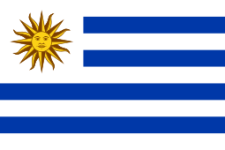
Saudi Arabia has been placed in Group H alongside Cape Verde, Spain, and Uruguay. The fixture list presents a steep climb: Cape Verde may be seen as the most beatable opponent, but they have proven tricky in recent tournaments. Spain, a global powerhouse, will dominate possession and dictate tempo, demanding constant concentration from the Saudi defence. Uruguay, with their formidable forward line led by experienced stars, will test the resilience of Donis’s backline. For Saudi Arabia to advance, they will likely need to beat Cape Verde and snatch at least a draw from one of the other two matches—a tall order given the disparity in European-based talent within the opposing squads.
Abdulhamid’s role becomes critical in this context. As the only player accustomed to the pace and tactics of European football on a weekly basis, he could be the vital link in translating Donis’s instructions against high-caliber opponents. His experience at Lens, where he has faced the likes of Paris Saint-Germain and nurtured his defensive attributes in a tactical league, might provide the extra dimension needed when Saudi Arabia bunkers down against Spain’s tiki-taka or Uruguay’s relentless press. The right-back’s ability to read the game and transition quickly from defence to attack could mirror the qualities that made him one of the few to break out of the domestic league.
The squad’s reliance on home-based players also raises tactical questions. While the Saudi Pro League has grown in quality, the intensity of a World Cup group stage is a different beast. Players who have not consistently tested themselves against the best in the Champions League or top-five European leagues may find the step up jarring. This is not to dismiss the evident technical ability within the Saudi squad—players like Salem Al-Dawsari, who scored the winner against Argentina, remain lethal—but the lack of diverse club environments could prove a handicap when adapting to the varied styles of Spain and Uruguay. The cohesion bred by a predominantly domestic squad, however, cannot be underestimated. Many of these players grew up together and have forged an understanding that foreign-based disjointed squads often lack. Under Renard, this unity was weaponized into a stubborn defensive block and swift transitions. Donis will hope to harness the same spirit.
Looking at the tournament as a whole, Saudi Arabia’s chances hinge on whether they can recreate the magic of 2022 while addressing the gaps that led to their early exit. The presence of a player like Abdulhamid indicates a small but significant step toward bridging the domestic-European divide. If he can carry his club form into the international arena, the Green Falcons might once again defy expectations. As the World Cup approaches, all eyes will be on how Donis molds a squad that is both familiar and slightly unfamiliar. The lone European-based player stands as a symbol of Saudi Arabia’s evolving football identity—one that has conquered domestically but still seeks validation on the global stage. Whether this singular exception becomes a trend in future tournaments will depend on how Abdulhamid and his teammates fare in the coming weeks.
Based on reporting from L'Equipe.