






Mistrzostwa Świata
Preview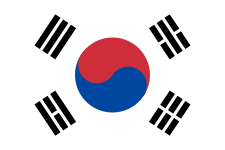
Team profile
Korea Południowa
The South Korea national football team, governed by the Korea Football Association (KFA), represents a nation with a deep-rooted passion for the game. While the KFA was initially formed in 1928, the modern association’s foundation is frequently traced to the establishment of the Joseon Football Association in 1933—a year that symbolizes the organized birth of Korean football. This team, simply known as "South Korea" or "The Taeguk Warriors," has evolved into Asia’s most consistent powerhouse. The team does not have a single home stadium but rather rotates venues across the country. The most iconic is the Seoul World Cup Stadium, built for the 2002 FIFA World Cup and holding over 66,000 fans. Other key homes include the Suwon World Cup Stadium and Busan Asiad Stadium. Seoul, the bustling capital, provides a vivid backdrop, with its modern skyline and deep football culture. South Korea’s greatest achievement remains reaching the semifinals of the 2002 FIFA World Cup, co-hosted with Japan—a historic run that captivated the world. They have qualified for every World Cup since 1986, a remarkable streak. Domestically, they rule Asian competitions with two Asian Cup titles (1956, 1960) and multiple runner-up finishes. At the Asian Games and EAFF E-1 Football Championship, they are perennial contenders. Legendary players define their legacy. Cha Bum-kun, a 1970s-80s icon, dominated the Bundesliga. Park Ji-sung, a Champions League winner with Manchester United, epitomized hard work. Son Heung-min, Tottenham’s star, is the current talisman and all-time leading scorer. Hong Myung-bo, the 2002 captain, earned the Bronze Ball at that World Cup. Playing style emphasizes intense pressing, speed, and never-say-die spirit often called "Korean Fighting." Tactically, they blend European physicality with Asian technicality. Fans are world-famous—the "Red Devils" (officially the Korean Red Devils supporters’ group) paint stadiums in crimson waves, with synchronized chants and the iconic "Daehanminguk!" roar. Today, South Korea sits as the top Asian team in FIFA rankings, regularly competing for every major trophy. Rivalries are fierce: the "East Asian Derby" with Japan, rooted in history and pride, and the politically charged matches with North Korea. An interesting fact: South Korea has never lost a World Cup qualifier at home against a non-Asian opponent since 1977. Their 2002 run also made them the first Asian team to reach a World Cup semifinal—a feat unmatched until 2022. With a blend of tradition and modern talent, the Taeguk Warriors remain Asia’s biggest football brand.
O Korea Południowa
Korea Południowa to profesjonalny klub piłkarski z siedzibą w ich regionie, założony w 1933. Korea Południowa obecnie dysponuje kadrą 32 zawodników rywalizujących w meczach ligowych. W terminarzu Korea Południowa jest 3 nadchodzących meczów z relacjami na żywo i typami AI. Sprawdź pełny terminarz, analizę formy, bezpośrednie spotkania i typy AI dla Korea Południowa.
Członkowie kadry
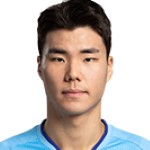
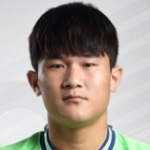
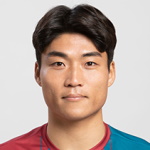
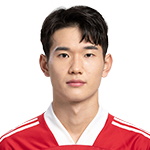
32 zawodnikówZobacz wszystko →
Nadchodzące

Korea Południowa team news
Zobacz wszystkieWiadomości04 cze, 21:40
Manu Koné: ‚Bądź skromny’ po porażce Francji 2:1
Manu Koné wzywa do skromności po porażce Francji 2:1 w meczu towarzyskim z Wybrzeżem Kości Słoniowej, podkreślając, że nie ma małych drużyn i potrzebę
Wiadomości04 cze, 09:48
Symulacja ścieżki Anglii na MŚ 2026: od DR Kongo po
Symulacje superkomputera Opta pokazują najbardziej prawdopodobną ścieżkę pucharową Anglii: DR Kongo w 1/32 finału, Meksyk w 1/16 finału, Brazylia w
Wiadomości04 cze, 04:00
Hiszpania rozpoczyna przygotowania do MŚ: Mecz towarzyski z
Hiszpania zmierzy się z Irakiem w meczu towarzyskim na Riazor w A Coruñi 4 czerwca 2026 roku w ramach przygotowań do Mistrzostw Świata 2026, a kibice z
Wiadomości03 cze, 05:02
Ranking składów na MŚ 2026: Pełna analiza 48 drużyn
ESPN rankinguje wszystkie 48 finałowych składów MŚ, analizując każdą 26-osobową selekcję pod kątem mocnych i słabych stron oraz szans na tytuł w całej stawce.
Wiadomości02 cze, 17:00
Odwołanie Meksyku w sprawie homofobicznego przyśpiewu
Cas odrzucił apelację Meksyku, utrzymując grzywny FIFA w wysokości 178 tys. dolarów za homofobiczny przyśpiew, ale uchylił zakaz stadionowy. Orzeczenie na
Wiadomości02 cze, 17:00
Odrzucone odwołanie Meksyku do FIFA: 178 tys. dolarów
CAS utrzymał grzywny FIFA w wysokości 178 tys. dolarów dla Meksyku za homofobiczne przyśpiewki, znosząc zakaz stadionowy, przed otwarciem Pucharu Świata z RPA