








Coppa del Mondo
Preview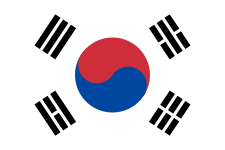
Team profile
Corea del Sud
The South Korea national football team, governed by the Korea Football Association (KFA), represents a nation with a deep-rooted passion for the game. While the KFA was initially formed in 1928, the modern association’s foundation is frequently traced to the establishment of the Joseon Football Association in 1933—a year that symbolizes the organized birth of Korean football. This team, simply known as "South Korea" or "The Taeguk Warriors," has evolved into Asia’s most consistent powerhouse. The team does not have a single home stadium but rather rotates venues across the country. The most iconic is the Seoul World Cup Stadium, built for the 2002 FIFA World Cup and holding over 66,000 fans. Other key homes include the Suwon World Cup Stadium and Busan Asiad Stadium. Seoul, the bustling capital, provides a vivid backdrop, with its modern skyline and deep football culture. South Korea’s greatest achievement remains reaching the semifinals of the 2002 FIFA World Cup, co-hosted with Japan—a historic run that captivated the world. They have qualified for every World Cup since 1986, a remarkable streak. Domestically, they rule Asian competitions with two Asian Cup titles (1956, 1960) and multiple runner-up finishes. At the Asian Games and EAFF E-1 Football Championship, they are perennial contenders. Legendary players define their legacy. Cha Bum-kun, a 1970s-80s icon, dominated the Bundesliga. Park Ji-sung, a Champions League winner with Manchester United, epitomized hard work. Son Heung-min, Tottenham’s star, is the current talisman and all-time leading scorer. Hong Myung-bo, the 2002 captain, earned the Bronze Ball at that World Cup. Playing style emphasizes intense pressing, speed, and never-say-die spirit often called "Korean Fighting." Tactically, they blend European physicality with Asian technicality. Fans are world-famous—the "Red Devils" (officially the Korean Red Devils supporters’ group) paint stadiums in crimson waves, with synchronized chants and the iconic "Daehanminguk!" roar. Today, South Korea sits as the top Asian team in FIFA rankings, regularly competing for every major trophy. Rivalries are fierce: the "East Asian Derby" with Japan, rooted in history and pride, and the politically charged matches with North Korea. An interesting fact: South Korea has never lost a World Cup qualifier at home against a non-Asian opponent since 1977. Their 2002 run also made them the first Asian team to reach a World Cup semifinal—a feat unmatched until 2022. With a blend of tradition and modern talent, the Taeguk Warriors remain Asia’s biggest football brand.
Su Corea del Sud
Corea del Sud è un club calcistico professionistico con sede in la loro regione, fondato nel 1933. Corea del Sud schiera attualmente una rosa di 32 giocatori che competono in partite di campionato. Nel calendario di Corea del Sud ci sono 3 partite in programma con aggiornamenti dal vivo e pronostici IA. Consulta il calendario completo, analisi della forma, scontri diretti e pronostici IA per Corea del Sud.
Membri della rosa
32 giocatoriVedi tutto →
Prossimi
Corea del Sud team news
Vedi tuttoNotizie04 giu, 21:40
Manu Koné: 'Rimani umile' dopo la sconfitta per 2-1 della
Manu Koné invita all'umiltà dopo la sconfitta amichevole per 2-1 della Francia contro la Costa d'Avorio, sottolineando che non ci sono squadre piccole e la
Notizie04 giu, 09:48
Il percorso dell'Inghilterra verso i Mondiali 2026
Le simulazioni del supercomputer Opta mostrano il percorso più probabile dell'Inghilterra a eliminazione diretta: RD del Congo al 32esimi, Messico ai 16esimi
Notizie04 giu, 04:00
La Spagna inizia la preparazione per i Mondiali: amichevole
La Spagna affronta l'Iraq in un'amichevole al Riazor di La Coruña il 4 giugno 2026, come parte della preparazione per i Mondiali 2026, con i tifosi che
Notizie03 giu, 05:02
Classifica delle rose dei Mondiali 2026: Analisi completa
ESPN classifica tutte le 48 rose finali dei Mondiali, analizzando ogni selezione di 26 giocatori per punti di forza, debolezze e speranze di titolo.
Notizie02 giu, 17:00
Appello del Messico sul coro omofobo respinto: multe da
Il TAS respinge l'appello del Messico, conferma le multe FIFA di 178.000 $ per il coro omofobo ma revoca il divieto allo stadio. Decisione a pochi giorni dal
Notizie02 giu, 17:00
Appello del Messico respinto dalla FIFA: multa di 178.000 $
Il TAS ha confermato le multe della FIFA per 178.000 $ al Messico per cori omofobi, revocando il divieto di stadio, in vista dell'esordio mondiale contro il