









Coppa del Mondo
Preview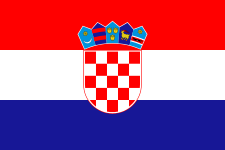
Team profile
Croazia
The Croatia national football team represents the Republic of Croatia in international men’s football, administered by the Croatian Football Federation (HNS). Although the modern independent team played its first official match in 1990, the roots trace back to 1912 when the Croatian Football Federation was founded under the Austro-Hungarian Empire, making it one of the oldest football bodies in the region. Croatia played as part of Yugoslavia until the country’s dissolution, then emerged as a powerhouse on the world stage. The team has no single home stadium, rotating among Zagreb’s iconic **Stadion Maksimir** (home of Dinamo Zagreb), Split’s atmospheric **Stadion Poljud**, and Rijeka’s **Stadion Rujevica**. Maksimir, located in the capital city of Zagreb, is the most frequent venue, hosting over 35,000 passionate fans. The city itself is a vibrant Central European hub, blending Austro-Hungarian architecture with a modern Balkan spirit. **Notable achievements** are extraordinary for a nation of just four million people. Croatia finished **third at the 1998 FIFA World Cup** in France (their first appearance), then became **runners-up at the 2018 World Cup** in Russia, and secured **third place again in 2022** in Qatar. They also reached the UEFA European Championship quarterfinals in 1996, 2008, and 2024. On the youth level, Croatia won the FIFA U-20 World Cup in 1987 as part of Yugoslavia, and the U-17 European Championship in 2023. **Legendary players** include **Luka Modrić**, the 2018 Ballon d’Or winner and midfield maestro who defined an era; **Davor Šuker**, the Golden Boot winner at the 1998 World Cup; **Ivan Rakitić**, the elegant playmaker; **Mario Mandžukić**, the tireless striker whose goals in 2018 (including the semifinal winner vs England) became folklore; and **Robert Prosinečki**, the technically gifted star of the 1990s. Goalkeepers **Zvonimir Boban** (later a captain turned AC Milan legend) and **Dominik Livaković** (hero of penalty shootouts in 2022 and 2024) also stand out. Croatia’s **playing style** is defined by technical excellence, quick passing triangles, and a midfield built on vision and control. Historically influenced by the Yugoslav school of football, they value creativity and fluid movement but also possess physical resilience. The “Vatreni” (The Fiery Ones) play with a proud, combative spirit rarely seen in smaller nations. **Fan culture** is electric. Croatia’s supporters are known for the **“Uvijek Vjerni”** (Always Faithful) chant and the sea of red-and-white checkered jerseys that create a checkerboard effect in stadiums. The **Torcida Split** (founded 1950) and **Bad Blue Boys** (Zagreb) often unite for national team matches, putting aside club rivalries. **Current status** remains elite: Croatia sits in the top ten of the FIFA World Rankings and qualified for UEFA Euro 2024, reaching the quarterfinals. With Modrić and a new generation like Joško Gvardiol and Lovro Majer, they continue to punch far above their weight. **Rivalries** are intense with **Serbia** (political and historical), **Yugoslavia**’s successor, and **Italy** (geographical and tournament clashes). Friendly but competitive rivalries exist with **England** (post-2018 and 2021 battles) and **France** (1998 and 2022 defeats). **Interesting facts**: Croatia is the smallest population to reach a World Cup final since Uruguay in 1950; their 1998 success inspired the “Croatian football miracle”; and their checkered kit – **“kockasti”** – is one of the most recognizable in world sport.
Su Croazia
Croazia è un club calcistico professionistico con sede in la loro regione, fondato nel 1912. Croazia schiera attualmente una rosa di 33 giocatori che competono in partite di campionato. Nel calendario di Croazia ci sono 4 partite in programma con aggiornamenti dal vivo e pronostici IA. Consulta il calendario completo, analisi della forma, scontri diretti e pronostici IA per Croazia.
Membri della rosa
33 giocatoriVedi tutto →
Prossimi
Coppa del Mondo
PreviewCroazia team news
Vedi tuttoNotizie04 giu, 09:48
Il percorso dell'Inghilterra verso i Mondiali 2026
Le simulazioni del supercomputer Opta mostrano il percorso più probabile dell'Inghilterra a eliminazione diretta: RD del Congo al 32esimi, Messico ai 16esimi
Notizie04 giu, 08:14
Il Manchester City minaccia azioni legali dopo la
Il Manchester City minaccia di denunciare un candidato alla presidenza del Real Madrid per la rivendicazione di una clausola di rilascio di Haaland. City, il
Notizie03 giu, 23:01
Perché la candidatura del Belgio per i Mondiali 2026 si
Romelu Lukaku entra ai Mondiali 2026 con solo 64 minuti di calcio di club in questa stagione e stress emotivo, mentre la generazione d'oro del Belgio cerca
Notizie03 giu, 22:33
Marquinhos fissa la mentalità per i Mondiali: 'Ogni partita
Il capitano del Brasile Marquinhos, reduce dalla vittoria della Champions League con il PSG, tratta ogni partita come se fosse l'ultima in vista dell'esordio
Notizie03 giu, 09:41
Il limbo di Rashford ai Mondiali: posizione da 26 milioni
Marcus Rashford si reca ai Mondiali con il suo futuro nel club irrisolto. Il Barcellona potrebbe offrire un altro prestito, il Manchester United chiede 26
Notizie02 giu, 22:06
Bellamy: Perché Koumas sarà il numero 9 del Galles
Il primo gol di Lewis Koumas per il Galles in un pareggio 1-1 contro il Ghana ha convinto Craig Bellamy che l'attaccante del Liverpool è la futura opzione