









Coppa del Mondo
Preview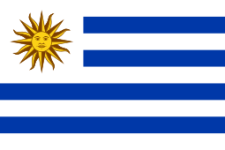
Team profile
Uruguay
The Uruguay national football team, governed by the Uruguayan Football Association (AUF) founded on March 30, 1900, stands as one of the most historically decorated and culturally significant teams in world football. While Uruguay lacks a single permanent home stadium, the team traditionally plays its major matches at the iconic Estadio Centenario in Montevideo—a stadium built to host the first FIFA World Cup in 1930. The Centenario, with its legendary tower and capacity of over 60,000, is a UNESCO World Heritage Site and the spiritual home of Uruguayan football. Uruguay’s achievements are monumental for a nation of just over three million people. They won the inaugural FIFA World Cup in 1930 on home soil, defeating Argentina 4–2 in the final. Their second World Cup title came in 1950 in Brazil, in the famous "Maracanazo"—a 2–1 victory over hosts Brazil in a decisive match that remains one of the greatest upsets in sports history. Uruguay has also won the Copa América a record 15 times, most recently in 2011. On the Olympic stage, they won gold medals in 1924 and 1928, both recognized as world championships before the World Cup era. Legendary players have defined Uruguay’s identity. Alcides Ghiggia scored the winning goal in the 1950 final; Juan Alberto Schiaffino was the orchestrator. Modern icons include Diego Forlán, the 2010 World Cup Golden Ball winner, Luis Suárez, one of the greatest strikers of his generation, and Edinson Cavani. The team’s playing style is epitomized by *garra charrúa*—a fierce, relentless fighting spirit emphasizing grit, tactical discipline, and never-say-die defense, often deployed in a compact 4–4–2 formation that has frustrated opponents for decades. Uruguayan fan culture is passionate and deeply nationalistic. The *hincha* (supporter) tradition is embedded in everyday life, with entire cities pausing for matches. The rivalry with Argentina is historic and intense, fueled by shared borders and a century of competition, while matches against Brazil carry enormous weight due to World Cup history. An interesting fact: Uruguay is the smallest country ever to win a FIFA World Cup. Currently, the team remains a South American powerhouse, consistently qualifying for World Cups and competing at the highest level under a new generation led by players like Federico Valverde and Darwin Núñez. Though not the dominant force of the early 20th century, Uruguay’s legacy as a giant-slaying titan remains unshakable.
Su Uruguay
Uruguay è un club calcistico professionistico con sede in la loro regione, fondato nel 1900. Uruguay schiera attualmente una rosa di 49 giocatori che competono in partite di campionato. Nel calendario di Uruguay ci sono 3 partite in programma con aggiornamenti dal vivo e pronostici IA. Consulta il calendario completo, analisi della forma, scontri diretti e pronostici IA per Uruguay.
Membri della rosa
49 giocatoriVedi tutto →
Prossimi

Uruguay team news
Vedi tuttoNotizie04 giu, 10:02
Il cammino della Spagna verso il Mondiale 2026: amichevoli
Il percorso della Spagna per il Mondiale 2026: amichevoli contro Iraq e Perù, poi gli scontri del Gruppo H con Capo Verde, Arabia Saudita e Uruguay. Il
Notizie03 giu, 05:02
Classifica delle rose dei Mondiali 2026: Analisi completa
ESPN classifica tutte le 48 rose finali dei Mondiali, analizzando ogni selezione di 26 giocatori per punti di forza, debolezze e speranze di titolo.
Notizie02 giu, 17:00
Appello del Messico sul coro omofobo respinto: multe da
Il TAS respinge l'appello del Messico, conferma le multe FIFA di 178.000 $ per il coro omofobo ma revoca il divieto allo stadio. Decisione a pochi giorni dal
Notizie02 giu, 17:00
Appello del Messico respinto dalla FIFA: multa di 178.000 $
Il TAS ha confermato le multe della FIFA per 178.000 $ al Messico per cori omofobi, revocando il divieto di stadio, in vista dell'esordio mondiale contro il
Notizie01 giu, 18:09
Rodri rinvia i colloqui sul futuro; Saliba è un dubbio per
Rodri rimanda i colloqui per il contratto con il Manchester City a dopo il Mondiale mentre l'interesse del Real Madrid cresce. Il problema alla schiena di
Notizie01 giu, 15:56
Saud Abdulhamid: l'unico convocato saudita che gioca in
Saud Abdulhamid, in prestito al Lens dalla Roma, è l'unica eccezione nella rosa saudita di 26 convocati per i Mondiali, altrimenti tutta composta da giocatori